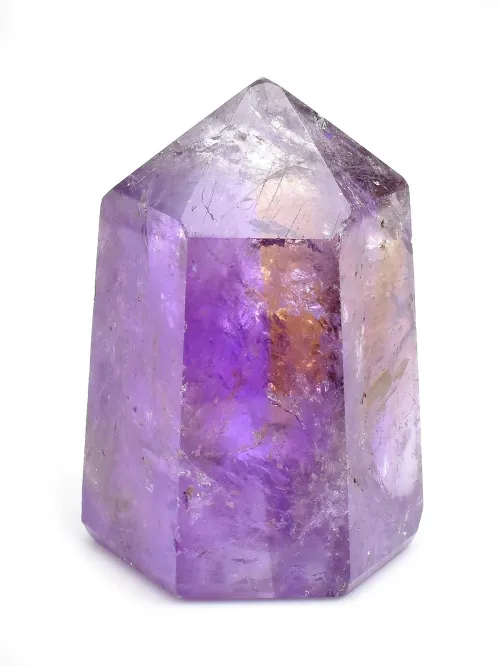
That violet necklace glowing in your jewelry box was a birthday treasure. That crystalline geode on your bookshelf caught your eye at a gem show. Amethyst charms us with its royal purple hues, but behind its sparkle lies a delicate quartz structure with specific vulnerabilities. Whether it's your grandmother's brooch losing its luster or cracks appearing in your favorite ring, this guide walks you through when expert hands become essential versus when home care suffices. We'll explore subtle risk signals hidden in your daily routines, decode how structural properties inform maintenance, and pinpoint professional intervention moments that preserve both beauty and value.
When daily wear turns into damage risks
Internal structural features you can't see but impact care
Warning signs requiring professional assessment
Common environmental threats to purple quartz
Balancing practical care with protective limitations
How often checks should happen based on use and value
Authentication and enhancement-related concerns
Imagine wearing your amethyst ring through gardening season – dirt lodges in its cathedral setting. At-home soaking didn't restore the brilliance, yet the thought of professional fees makes you hesitate. Several everyday scenarios demand gemologist expertise:
When crevices accumulate stubborn residues from cosmetics, oils, or environmental pollutants, specialized processes like gentle ultrasonic cleaning become necessary. Unlike surface dirt, trapped particles bond to fissures or embedded inclusions common in quartz crystals. Moreover, pieces in deep-basket settings need microscopic inspection to evaluate prong integrity. Normal jewelry movement gradually stresses metal components – a risk invisible without magnification yet potentially leading to stone loss if overlooked.
Amethyst sits at hardness level 7 on the Mohs scale – resilient against accidental scrapes yet surprisingly brittle during sudden impacts. This paradox stems from its silicon dioxide composition where natural imperfections create micro-fault lines. Two key structural aspects affect care decisions: heat sensitivity threatening its signature purple, and internal weaknesses requiring customized approaches.
The distinctive violet emerges from trace iron impurities interacting with natural irradiation. When stones experience prolonged high heat exposure during cleaning or daily wear (like near stovetops), they may lose saturation from molecular changes.
Microscopic fissures form during crystallization underground. Though stable under normal conditions, techniques involving intense vibration or thermal shock risks expanding these fractures. Professionals pre-test stones by:
This knowledge informs safe methods for opaque versus translucent varieties as surface porosity dictates approach.
Your pendant passed the "sparkle test" this morning, but subtle shifts can signal underlying issues. Cloudiness presents differently across amethyst forms – jewelry develops milky patches while geodes show diminished refractivity along cleavage lines.
Notice these markers:
Such changes become prominent when residue builds in carved details, inhibiting light transmission. Prolonged exposure to cosmetics or pollutants typically creates surface etching before deeper damage.

That bright summer day by the pool poses quiet risks – chlorine interactions may weaken silver components over seasons. Urban dwellers face another threat: atmospheric pollutants accumulating microscopic patina on stones displayed near windows.
Preventative habits matter:
Remove jewelry before swimming pools (chlorine degradation) or gardening (soil acids). Rotate decorative geodes away from direct heat sources if they contain liquid inclusions – trapped water expands under temperature shifts. Though amethyst withstands routine exposure better than many stones, settings become vulnerable through repetitive chemical contact or abrasive situations.
Home steam cleaning feels efficient until heat-sensitive amethyst encounters unexpected color fading. While lukewarm soaks suit routine care, recognize professional limits and advantages:
Annual gemologist visits allow ultrasonic technology assessment – high-frequency sound waves efficiently remove stubborn contaminants. However, specialists always verify fissure presence first, as vibrations may damage fractured stones. For antique pieces with undocumented origins, they examine prior repairs before selecting techniques.
Diluted mild soaps work for surface cleaning provided settings remain intact. Avoid:
Carved pieces collect residues needing soft brushes for grooves – pressure risks breaking delicate projections.
Your weekly-worn crystal ring endures more stress than a display geode – adjust schedules accordingly. Pieces serving as regular jewelry benefit from biennial professional inspections to detect micro-wear. High-iron stones needing fracture risk assessment warrant more frequent visits.
Three value determinants justify specialty care:
Certified stones with documented cleaning restrictions validate the maintenance investment particularly for premium specimens.
Now that you recognize intervention situations, create a personalized care rhythm. Next month when considering professional assistance, look for these signs:
Simply bookmark this checklist for future reference. When any indicator applies, finding a reputable jeweler becomes your next best move for preserving amethyst’s captivating clarity.
Antique auction finds pose unique challenges – previous repairs or enhancements may react unpredictably to modern techniques. Professional verification always precedes cleaning, especially for undocumented stones.
Reputable specialists utilize:
These prevent unnecessary risks with enhanced specimens or fracture-prone stones.
Readers seeking deeper technical insights may consult these credible materials:


$
