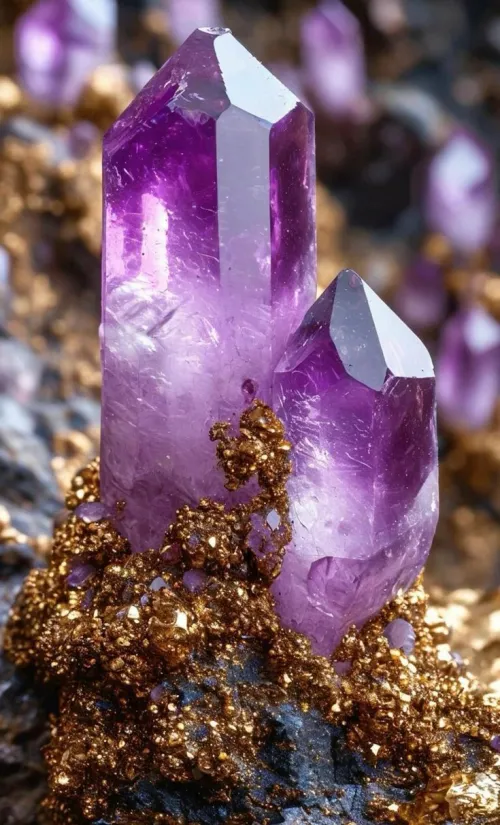
You've washed your amethyst piece—perhaps a cluster that caught sunlight beautifully or a smoothed palm stone—and now stand holding the damp crystal. That sparkle feels slightly muted, maybe even worryingly dull where water lingers in crevices. Or perhaps a favorite specimen has lost its characteristic shine over months of handling. Questions flood in: How should this water truly be removed? What's involved in bringing back that captivating inner depth and light reflection? Using the wrong method might leave micro-scratches or moisture clouding where clarity existed. We address these exact moments—whether caring for recently acquired geodes or treasured personal stones—by exploring how amethyst's unique properties guide safe drying and intentional polishing practices that respect the stone's natural beauty and structure.
Every step in maintaining amethyst begins with mindful handling. You encounter this whether unpacking a new cluster, moving pieces for display, or holding specimens during routine inspection. Improper grip or sudden movements might unexpectedly aggravate existing hairline fractures. Gentle contact matters throughout cleaning, drying, polishing, and storage.
Amethyst sits at 7 on the Mohs scale, making it generally scratch-resistant like quartz, yet its crystalline structure carries cleavage planes susceptible to sharp impact. Supporting the entire weight of a piece during transfer rather than gripping edges prevents flaking. Placing items onto padded surfaces, such as microfiber towels or foam, absorbs minor vibrations. These precautions become particularly crucial during extended procedures like drying or polishing where repeated handling occurs. Consistent attention here directly influences whether moisture fully dissipates or catches in unreachable fissures.
Drying concerns and polishing methods flow logically from the material itself. Silica dioxide forms hexagonal crystal lattices and hosts trace elements creating amethyst's signature violet. This quartz-based foundation behaves predictably under specific conditions—if you understand its interplay with moisture and physical contact.
Surface cloudiness develops when water remains trapped along micro-fractures or within tiny pits. While pure quartz repels water somewhat, impurities within amethyst may attract moisture longer, necessitating thorough air flow around every facet. Likewise, its vitreous (glass-like) luster responds well to polishing, yet uneven pressure risks creating stress where boundaries between crystal zones meet. Knowing that residues from abrasive compounds might seep into porous inclusions if not fully removed informs rinsing choices after polishing.

Your specific amethyst—a deep purple cluster rich with terminations, a light lavender tumbled slice, or a large polished free-form piece—displays traits impacting its care path. Variations in clarity, termination points, depth of color, existing fractures, or mineral inclusions call for personalized drying focus and polish technique.
Highly transparent pieces or window-like sections demand extra caution. Excess moisture or polishing residues might become trapped inside cavities, making hazing more visible than on opaque chunks. Gentle but prolonged air drying helps prevent trapped fog.
Needle-like points, especially thin ones, pose drying challenges where bases connect to main crystals. Polishing near sharp terminations requires lighter touch to prevent fracture. Consider positioning during drying to avoid moisture pooling.
Crystals housing other minerals, such as goethite strands or cacoxenite feathers, react unpredictably to vibration. Methods avoiding ultrasonic cleaners become vital. Polishing over inclusions requires assessing their hardness compared to quartz.
Whether you keep amethyst in constant humidity beside a bathroom sink, regularly handle personal meditation stones, or have specimens displayed under intense lighting, functional use shapes your care techniques.
Specimens near water sources face recurring minor moisture exposure. Fast drying techniques preventing humidity absorption over time protect against permanent water staining, which tends to begin subtly near the base. Frequently handled tumbled stones benefit from gentle wiping with lint-free cloths to remove natural skin oils that gradually mask shine. Environment matters; polished jewels under warm case spotlights may show fingerprints more readily, requiring occasional delicate buffing without adding compounds. Techniques focus on maintaining integrity and appearance within established routines rather than drastic restoration.
Your goals, resources, and the specimen’s state help shape effective drying and polishing actions. Some require simple tools for regular upkeep, others need specialized methods for neglected pieces recovering their glow.
Place washed crystals on an absorbent, lint-free cloth (microfiber excels) at room temperature. Avoid direct sunlight that might unevenly expand facets. Positioning on a slight angle lets moisture flow down. Rotate larger specimens periodically. Well-ventilated spots usually suffice; humid climates might extend times.
Simple Hand Buffing: Soft cloths restore shine for lightly dulled surfaces. Circular motions build gentle friction warmth without pastes. Ideal for minor skin oil film.
Abrasive Compounds: Fine aluminum oxide paste addresses minor scratches. Apply minimally with cloth patches or wooden tools. Work small areas evenly, followed by careful rinsing to prevent residue clinging inside crevices. Requires re-drying.
Rotary Systems or Tumbling: Best suited for similarly durable tumbled pieces or clusters free from fractures. Use cushioning media in tumblers and slow drum speeds. Constant inspection prevents overheating points.
Handle your amethyst as the unique geological treasure it truly is – patience matters more than pressure. Resist the urge to speed-dry damp points with heat; room air reliably does its work over hours. Select polishing intensity only after closely examining the facets you want to enliven; tiny pits might catch grit otherwise. A well-maintained piece retains both its visual depth and geological history. Try setting aside your favorite polishing cloth near your regular sitting or display space—seeing it becomes a gentle prompt to occasionally buff handled items whenever lighting reveals fingerprints.
Q: Can leftover moisture significantly dull an amethyst cluster?
A: Persistent moisture exposure may interact with microscopic surface imperfections, creating visible patches that obscure the underlying crystal’s clarity over time. Ensuring thorough, undisturbed air drying often prevents this development.
Q: How soon after washing should polishing begin?
A: Polishing requires completely dry surfaces. Start handling steps only when you can observe no moisture traces—particularly around termination bases and existing fractures—which typically takes 4-48 hours based on piece size and humidity levels.
Q: Can all polishing compounds work effectively on amethyst?
A: Non-silicone based pastes with soft abrasives like aluminum oxide in fine grits tend to yield good luster enhancement. Aggressive materials like emery compound might unexpectedly etch surfaces despite amethyst’s hardness. Testing small hidden facets first may be prudent.
Q: How frequently should polished items or displays receive attention?
A: Assess pieces individually when lighting reveals reduced shine. High-handling items may benefit from light wiping monthly; others maintain a polished appearance for significant time periods before showing signs requiring effort.


$
