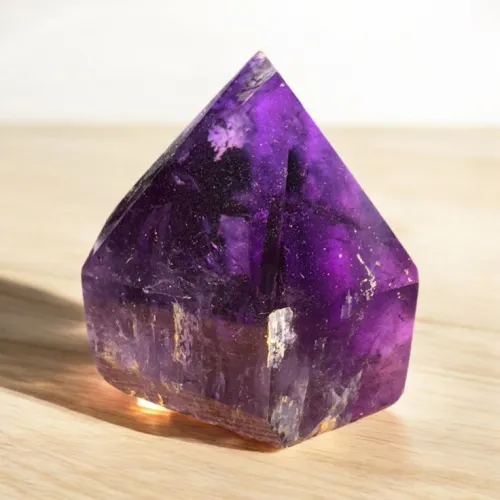
Imagine untangling last year's lights—that moment when you rediscover that special ornament tucked in the box. Perhaps it's the deep violet one that catches the tree lights just so. This year, you're considering adding amethyst crystal decorations to your collection. But between delicate branches and eager decorators, how do you choose pieces that shine beautifully while holding up season after season? We'll navigate through material properties, light interaction, and design considerations to help you confidently select decorations that merge seasonal charm with lasting quality. Whether you prefer polished teardrops or raw crystal spikes, understand how size, weight, and light behavior affect your decorating vision before balancing aesthetics and practicality.
Choosing meaningful decorations • Materials and longevity factors • Visual impact fundamentals • Craftsmanship techniques • Weight limitations • Light interaction principles • Seasonal upkeep
When you hang that first ornament, you're not just decorating—you're curating memories. Amethyst brings geological time into your living room. That violet sparkle comes from iron traces trapped in silicon dioxide over millennia. Unlike mass-produced baubles, each piece carries nature's signature variations.
You'll notice these natural differences during decoration. One crystal may shine pale lilac in daylight while another glows rich plum under LED fairy lights. This variability impacts visual coherence if you use multiple ornaments. Deeper hues tend to anchor heavier decorating schemes, while translucent pieces lend themselves to minimalist trees. The crystal's inherent density means you’ll feel satisfying weight in your palm—a tactile contrast to lightweight plastic alternatives.
That captivating purple isn't paint or dye—it's chemistry. Trace iron within the quartz structure creates amethyst's signature color. How the crystal formed influences its stability; natural fractures may develop if it gets bumped against hard surfaces.
With a Mohs hardness rating of 7, these crystals withstand accidental brushes against metal hooks or other ornaments. However, they can develop chips along cleavage planes if dropped onto hard flooring during handling. You might notice conchoidal fractures under magnification after impact—jagged breaks resembling clamshell curves.
Craftsmanship matters too. Wire wrapping using brass or sterling silver provides secure suspension points without stressing the stone. Thin-wrapped designs may eventually bend if ornaments get stored with heavier items pressing on them. Thicker gauge wires better maintain shape across seasons when your storage boxes inevitably shift.
Unwrapping ornaments transports you to decorating day—the smooth coldness of polished stone versus rough crystal edges. Surface texture directly shapes your tree's character.
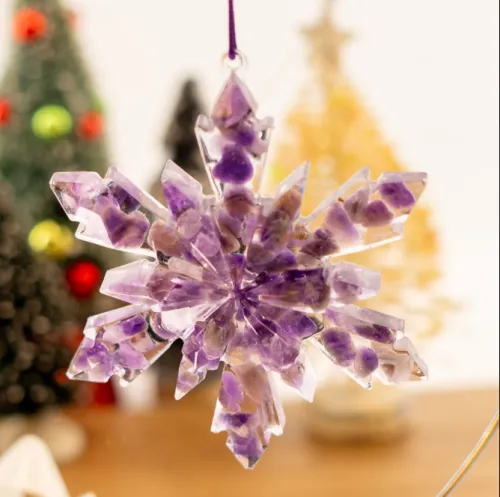
Choose tumble-finished pieces when decorating lower branches accessible to small hands—their rounded edges won't scratch skin or snag sweaters. Higher branches sustain intricate faceted designs reflecting distant lights like tiny violet stars. Translucency determines how shadows play across the crystal when backlit. Highly transparent ornaments become glowing lanterns against dark branches, while opaque pieces showcase surface sparkle under direct lights.
Notice how some ornaments sit gracefully while others twist awkwardly? That's geometry meeting gravity. Precise cuts influence both aesthetics and physics.
The wire wrapping technique determines how amethyst rests in relation to branches. Wide-loop suspensions allow swinging reflections, creating kinetic glitter. Smaller loops give controlled placement for rigid geometric forms. Cutting style also affects light behavior—deep pavilion angles refract beams into rainbow flashes, while shallow cuts create broader washes of violet. When positioning them, you'll discover which angle catches ambient light as you move through the room.
Ever heard that soft *crunch*? Thin branches struggling under heavy decorations make distinctive sounds. Natural amethyst can be surprisingly weighty.
Typical 1-3 centimeter pieces feel substantial compared to glass or plastic alternatives. Before hanging, test branch flexibility by gently pressing down near the trunk. Firmer branches handle central weights, while delicate tips do better with smaller crystals or clustered bead strings distributing mass. Balance heavier focal pieces with lightweight complementary decorations like crystal dust strands.
You'll notice stability differences between hanging methods. Sterling silver wires grip branches securely but may dent softer woods over time. Brass loops slide easier during adjustment. For irreplaceable pieces, consider supplementary transparent fishing line supports discretely tied around sturdier interior branches.
It's always that moment when twilight fades and tree lights awaken—suddenly your amethysts transform from pretty stones to glowing wonders. Optics make them holiday performers.
Faceted cuts interact powerfully with directional lighting. Position spotlights 45 degrees above ornaments to maximize prism flashes across your ceiling. For string lights, wrap branches first so bulbs align slightly behind crystals. Deep violet stones absorb warm white bulbs beautifully, while pale specimens pair well with cooler LEDs creating icy moonlight effects. Avoid tight clustering—space permits each piece to catch independent angles of light.
When boxing decorations feels wistful, remember proper storage ensures next season's rediscovery remains magical. Amethyst prefers gentle care despite its ruggedness.
Natural oils from decorating hands may dim surface shine temporarily. A soft toothbrush dipped in mild soapy water revitalizes luster after the season—just avoid soaking porous stones. Drying requires care too; pat with flannel cloth rather than rubbing. Notice that polished pieces maintain clarity longer than rough textures where dust may gather in crevices. Periodic storage brushing helps.
Prolonged direct sunlight may fade violet tones over decades, so avoid permanent display in bright windows. Winter temperatures rarely threaten structural integrity—amethyst withstands freezing outdoor conditions when placed in covered porches or trees. Rapid temperature shifts, like shifting ornaments from cold storage to heated rooms, rarely cause issues due to low thermal expansion rates.
The true enemy comes from neighbor-scratches inside packing boxes. Tuck each piece into soft velour pouches or wrap individually with unbuffered acid-free tissue. Avoid stacking. Your wrapping strategy matters more than storage location—consistent cushioning prevents abrasions regardless of garage, attic, or closet placement.
The perfect amethyst choice reveals itself when you balance aesthetics with living realities. Notice how your tree functions and feels beyond static pictures.
As you decorate this year, try this: pause after hanging each amethyst piece. Notice its visual relationship with nearby decorations, check branch stability with a gentle tap, and observe how nearby lights enhance its character. This mindful approach often reveals perfect placements that technical specifications alone can't predict. Before packing up in January, snap a phone picture of your favorite ornament positions—a practical memory that guides delightful rediscovery next December.


$
