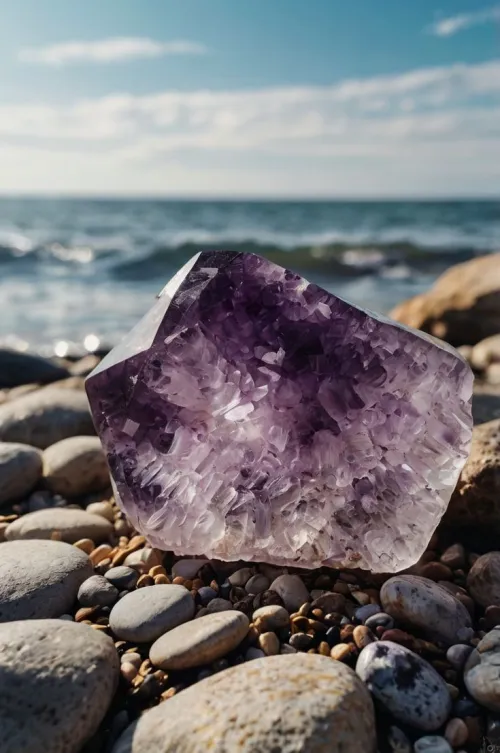
Those vivid purple clusters that decorated your holiday table or complemented your Solstice outfit now sit unused. Finding those gems faded or scratched when next season arrives can feel like discovering melted snow globes in the attic. Let's explore storage systems that preserve amethyst's natural beauty during its "off-season" downtime. This guide unpacks how to create micro-environments defending against sunlight damage, humidity, and accidental knocks when your crystal pieces aren't in active use – because thoughtful preservation lets those deep violet hues shine brightly for many holidays ahead.
Essential storage principles every collector should know
How amethyst's physical traits shape your storage decisions
The invisible environmental factors affecting color preservation
Choosing between display cases to archival boxes
Cleaning techniques before long-term storage
Safe transportation methods between locations
Adjusting storage approaches by timeline
Practical solutions for common challenges
Picture pulling out your favorite amethyst pendant next Yuletide to find its surface scratched or its color dulled by invisible residue. This happens when three core principles get overlooked: containment, environmental separation, and surface preparation. Unlike displaying crystals during holidays, off-season storage requires prioritizing defense over aesthetics.
Moisture-resistant containers prevent interaction with airborne humidity that can accumulate over months. Since amethyst ranks at 7 on the Mohs hardness scale, scratch prevention becomes essential. You wouldn't store champagne flutes loose in a toolbox – similarly, creating buffer zones using padded compartments prevents contact damage when pieces rest together.
That deep violet sparkle that embodies wintry elegance carries vulnerabilities during storage. Like remembering how wool fibers need moth protection during summer months, preserving amethyst requires understanding its mineral traits.
Thermal shock from sudden temperature changes can create internal fractures in amethyst crystals – say when moving decorations from a heated home to an uninsulated attic. Furthermore, ambient light levels below 50 lux are recommended to maintain color stability during dormant periods. Keep in mind that prolonged exposure to direct sunlight may cause gradual fading. Separate storage prevents harder minerals like topaz from unintentionally abrading amethyst surfaces during their coinciding storage months.

Amethyst sits mid-scale at hardness 7 meaning:
Storage environments mirror museum preservation approaches, controlling variables that slowly alter crystalline structure. Whether keeping solstice geodes in a display cabinet or Yule jewelry in dresser drawers, consider these invisible factors.
Relative humidity levels at 40-50% prevent crystalline water loss in extreme conditions, meaning winter-dry rooms might require silica gel packets to absorb atmospheric moisture. Temperature stability between 15-25°C minimizes thermal stress during seasonal shifts. Multi-stage containment systems provide layered protection against such fluctuations – think padded box inside a climate-controlled drawer rather than open shelving near sun-facing windows.
Imagine unboxing amethyst jewelry after seasonal storage: Does your choice of case create welcoming protection or accidental hostility? Material interactions matter more than aesthetics when pieces remain untouched.
Velvet-lined storage cases offer impact protection through cushioned internal surfaces, while acid-free tissue prevents chemical transfer in storage boxes. Avoid PVC-based plastics that may degrade over time, potentially releasing damaging vapors. Airtight containers prevent dust accumulation and are essential for pieces kept in attics or garages. For clusters or jewelry, individual compartments maintain protective borders like book spines keeping pages intact during storage.
Safest choices include:
Pre-storage cleaning resembles winterizing a cherished fountain – skip it, and you risk springtime disappointment. Surface contaminants become problematic over months without routine care.
Pre-storage cleaning neutralizes skin oils and cosmetic residues that could cause dullness. Consider using neutral pH cleaning solutions to preserve surface integrity without risking etching. Always ensure pieces are thoroughly dry before boxing them away – trapped moisture may create hazy deposits. Inventory labeling systems help track stored items without repetitive physical handling, whether organizing multiple holiday decorations or heirloom jewelry collections for future generations.
Follow this sequence:
Moving stored pieces between locations introduces unique risks – like relocating holiday decorations from closets to main display areas. These transitions are when amethyst sustains most damage between uses.
Use vibration-isolating materials inside containers to minimize micro-fracture risks during movement between storage spaces. If transporting multiple pieces simultaneously, soft packing material prevents "crystal chatter" where pieces abrade each other. Remember thermal shocks: avoid moving sealed containers directly between cold garages/heated rooms without temperature acclimatization stages.
Seasonal storage differs from decade-long preservation – just as you'd pack a picnic differently than a Antarctic expedition. Match protection levels to your timeline.
For three-month storage between holidays, fabric-lined jewelry cases may suffice. For year-long durations, opt for hermetically sealed cases with humidity controls. Multi-stage containment – padded inner case within a sealed outer container – becomes worthwhile for long-term storage of heirloom pieces. Adjust silica gel quantities based on estimated duration; longer storage requires higher-quality humidity absorbers.
Believing plastic food containers provide adequate protection or that "all fabrics are equal" leads to common storage regrets once holiday seasons roll back around. Let's distinguish facts from folklore.
Myth: Sunlight only harms amethyst during display. Reality: Fading happens slowly through fabric boxes near windows. Tradeoff: Visual-access cabinets offer easier identification versus light-blocking sealed containers. Avoid silver-polishing cloths near jewelry; chemicals accelerate tarnishing. While vibration-isolating materials protect during moves, they occupy space – balance risk levels with your handling frequency.
This weekend when packing holiday decorations, try a simple experiment: wrap one amethyst piece in acid-free tissue inside an opaque container. Keep another loosely packed per your usual method. Document both surfaces before storage. When retrieving them next season, compare scratches and color retention – you might discover a preservation revolution begins with one thoughtful practice.
For deeper exploration around amethyst preservation:


$
