Amethyst mining primarily involves surface operations in volcanic regions where geodes are exposed, though underground methods access deeper veins. Artisanal miners manually extract specimens while larger operations employ controlled blasting and sorting processes. Environmental safeguards minimize habitat disruption during extraction.
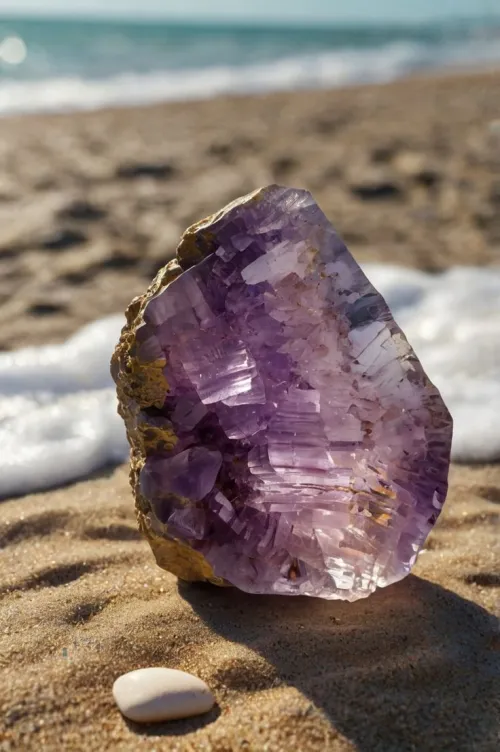
Have you ever held an amethyst cluster, feeling its cool weight while wondering about its journey from Earth’s depths? The world of gemstone extraction remains largely hidden, shrouded in mystery as deep as the geodes themselves. This confusion often leaves enthusiasts unsure how their cherished purple crystals emerge unscathed from harsh geological environments. We'll demystify this process, walking you through each stage—from the explosive volcanic origins to the careful sorting tables—explaining not just the "how," but the "why" behind extraction choices. By the end, you'll recognize how geological forces shape mining decisions and appreciate the delicate interplay between mineral treasures and the environments that cradle them.
Let’s explore the essential phases of bringing amethyst from geological formation to gemological applications:
• Geological prerequisites dictating mining locations • Primary extraction techniques employed globally • Post-mining value enhancement procedures • Environmental safeguards in mineral recovery
Picture small-scale miners crouched before jagged basalt cavities, gently prying out violet-tipped crystals with hand tools. This intimate scene coexists with industrial approaches where track hoes claw through sedimentary layers blanketing geode beds. Mining begins only after thorough geological surveys identify formations conducive to amethyst development, typically near ancient volcanic provinces where mineral-rich solutions once penetrated gas cavities in cooling magma. Amethyst mining tends to prioritize minimally invasive approaches due to the crystal’s tendency to form in delicate geodes. Modern geophysical mapping now guides excavation planning by identifying magnetic anomalies signaling promising voids beneath.
The Mohs hardness rating of 7 makes extraction viable with both hand tools and machinery. Surface soil stripping often reveals horizontal geode beds in decomposed rock layers where mechanical excavators scrape away overburden. For vertical veins in harder igneous formations, tunneling allows access while reducing surface disturbance. Selective extraction techniques preserve crystal clusters by avoiding direct contact with drilling equipment whenever possible. Many operations employ water-assisted separation methods during initial processing to minimize impact.
Amethyst owes its genesis to tumultuous volcanic activity occurring millions of years ago. During immense lava flows, gas pockets became trapped like bubbles in cooling basaltic rock, creating hollow chambers that would eventually transform into geodes. Silica-rich groundwater then percolated through porous volcanic rock, depositing microscopic quartz crystals within these cavities over millennia. Trace iron content within this slow-moving solution gradually infused developing crystals with their signature purple hues through natural irradiation. These geological processes required specific pressure/temperature conditions found only in particular regions globally. The hexagonal crystalline structure of amethyst dictates its formation patterns, often leading to inward-projecting crystal clusters within geodes.

These distinctive formations develop according to predictable mineralogical parameters:
The presence of iron (Fe³⁺) within silicon dioxide solutions remains essential for color development, with irradiation levels during crystal growth influencing saturation.
Geode surfaces provide nucleation points where tiny seed crystals begin developing inward, layer by layer, into six-sided tapered points.
Crystal faces develop over geological timescales – some geode formations date back to volcanic events over 130 million years ago.
Visualize Brazilian garimpeiros (small-scale miners) meticulously probing amethyst-bearing conglomerates with iron rods to detect hollow sounds, followed by careful hand excavation. These traditional approaches persist alongside industrial operations where backhoes expose horizontal geode layers for systematic collection. Surface mining dominates when crystals occur in shallow deposits near decomposed rock layers. Operators remove overlying material with earth-moving equipment before workers carefully break apart mineralized cavities with chisels and geological hammers. For vertical veins extending deep into basalt formations, underground tunneling provides necessary access. Hydraulic fracturing techniques may facilitate vein extraction by creating controlled fractures in surrounding rock.
Special consideration governs each approach:
Responsible operations initiate pre-mining biodiversity surveys documenting native wildlife habitats near extraction zones. Progressive reclamation planning begins before the first crystals are recovered, with soil stockpiles preserved for restoring topography. Habitat fragmentation concerns drive mining patterns that follow natural land contours, while operational runoff undergoes decantation to prevent downstream sedimentation. Many modern mines implement tiered mitigation zones, creating buffer areas with enhanced protective measures surrounding core extraction regions.
Environmental management typically includes:
After extraction, geological treasures undergo transformative processes:
Processing techniques influence both aesthetic presentation and market valuation significantly. Thermal treatments may intensify hues in specimens showing color potential but inadequate saturation. Vibratory tumblers smooth industrial-grade amethyst fragments into uniformly shaped beads while protecting crystalline definition in lapidary-grade material. Each decision preserves maximum yield without compromising inherent geological value.
Amethyst distribution flows through layered channels beginning with mine-gate brokers connecting with global wholesalers. Cutting facilities purchase rough crystals based on predicted yield from facets rather than specimen value. The Mohs scale hardness of 7 permits various cutting styles without unusual fracture risks, allowing standard gem fabrication equipment. Market valuation fluctuates according to regional mining outputs and evolving consumer preferences.
Industry practice trends include:
Small-scale mines often operate within seasonal windows dictated by dry periods, allowing flexible involvement for agricultural communities. Transportation access critically influences enterprise viability – remote operations require significant deposit size to justify infrastructure investment. Market volatility creates challenges for long-term planning, though increasing traceability demands create value opportunities for transparent mining co-operatives. Depletability concerns drive systematic resource mapping, with established mines typically reserving peripheral zones for phased development.
Next time you hold an amethyst point, take a moment to visualize its geological history and human extraction effort. Notice its heft—the density revealing its volcanic beginnings. Observe natural inclusions that survived its journey intact. Consider how your appreciation grows when understanding the immense time and care behind its arrival. This awareness helps us collectively value not just the crystal itself, but the landscapes and people integral to its story.
Q: Why are amethyst mines concentrated in specific global regions?
A: Geological conditions are quite particular - volcanic terrain combined with mineral-rich groundwater creates rare suitable environments.
Q: How do miners locate amethyst deposits effectively?
A: Geophysical surveying identifies magnetic anomalies potentially indicating geode clusters, later verified by exploratory trenching.
Q: What distinguishes extraction techniques for different deposit types?
A: Softened sediment layers allow mechanical stripping while hard-rock vein mining requires specialized tunneling approaches.
Q: Does mining affect amethyst's crystal structure or properties?
A: When carefully extracted following fracture planes, the mineralogical integrity remains unchanged across all mining methods.
Interested readers may wish to explore these authoritative information categories:


$
