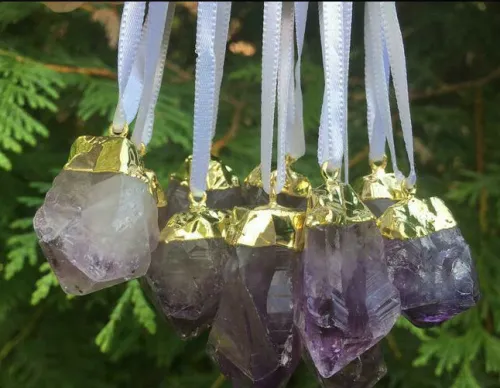
Imagine this: You've carefully placed glittering stars along your favorite amethyst geode’s surface for a festive display. But now, sticky residues cling stubbornly to those beautiful crevices, obscuring the crystal’s natural glow. Or perhaps adhesive from repair work clouds its polished face, leaving you hesitant to touch anything harsh enough to risk harming the gem. As soothing purple light filters through your window, frustration mounts with every stubborn glitter fleck. What unfolds next? Gentle techniques that honor this mineral’s unique properties - from its position on the Mohs scale to its hidden fractures. These approaches address both the science of residue chemistry and the practical nuances of crystal care. By the time morning light graces your windowsill again, you may be admiring a restored natural masterpiece using methods as thoughtful as the crystal itself.
The first step is assessing residue challenges
Understanding amethyst's physical sensitivities
Identifying residue characteristics and adherence patterns
Selecting safe solvent applications
Mastering physical removal techniques
Implementing damage-prevention protocols
Establishing long-term maintenance
Troubleshooting specific glitter scenarios
Picture yourself trying to peel a price tag from your amethyst figurine’s base. Some adhesives seep into microscopic spaces invisible under ordinary light, bonding differently depending on whether they’re water-based or solvent-activated. The thing is, porous mineral inclusions beneath the surface often absorb liquid glues more readily than solid crystal faces, creating what feels like permanent residency in those artistic crevices you admire so much. Let’s start with glitter: those metallic flakes often feature surprisingly sharp edges that catch in natural fractures, essentially hooking themselves in place like microscopic anchors. Thicker residues typically require longer solvent exposure - yet amethyst itself dictates safe time limits. That tension between stubborn adhesives and delicate crystals defines your starting challenge.
Think of your amethyst not as decoration but as a geological storyteller, demanding particular respect for its physical chapters. As a 7 on the Mohs scale, it’s moderately durable - but that hardness rating can mislead us. Micro-abrasions risk developing around glitter particles with metallic edges when scrubbing, dulling spots that once sparkled under candlelight. Here’s something practical: heat sensitivity necessitates lukewarm solution temperatures staying below 40°C (104°F), preventing thermal shock fractures common when crystals transition rapidly between extremes. Hidden surface fractures represent another vulnerability; they can retain glitter flecks like natural pockets, requiring gentle coaxing rather than forceful pressure. Understanding these traits becomes your foundational toolkit.
The stubbornness of adhesives varies dramatically between that gift-wrap glue incident and the artisan glitter meant to accent crystal clusters. Water-based residues dissolve relatively predictably with mild soap solutions, while solvent-based counterparts often require specific alcohol concentrations below 70%. Imagine examining residues under angled lamplight: their thickness directly correlates with required solvent dwell time before removal attempts.
Different glues demand tailored approaches
Water-Based Adhesives The soapy solution method described in section three typically breaks these down efficiently.
Acrylic Residues & Double-Sided Tape Isopropyl alcohol between 50-70% concentration may soften these without crystal harm.
Epoxy or Commercial Glues Often requires professional consultation - spot test absolutely anything unfamiliar first.
Glitter presents its own puzzle too. Treated versus untreated crystal surfaces demonstrate radically different adherence patterns for those tiny flakes - while flat planes release them more readily than textured growth formations.
Choosing cleaning agents for amethyst resembles selecting ingredients for a delicate recipe - proportions and timing change everything. Alcohol solutions under 70% concentration tend to show effectiveness on acrylic residues without harming amethyst, especially when paired with precise timing. Picture this: extended soaking shouldn’t exceed 10-15 minutes, preventing infiltration into natural porous inclusions. Vinegar solutions above 5% acidity risk etching polished surfaces but diluted versions at room temperature may assist with mineral deposits. The most reliable starting point often combines:
Always test mixtures on inconspicuous crystal sections first, watching for 24-hour reactions before proceeding. That tiny moment of caution protects decades worth of beauty.
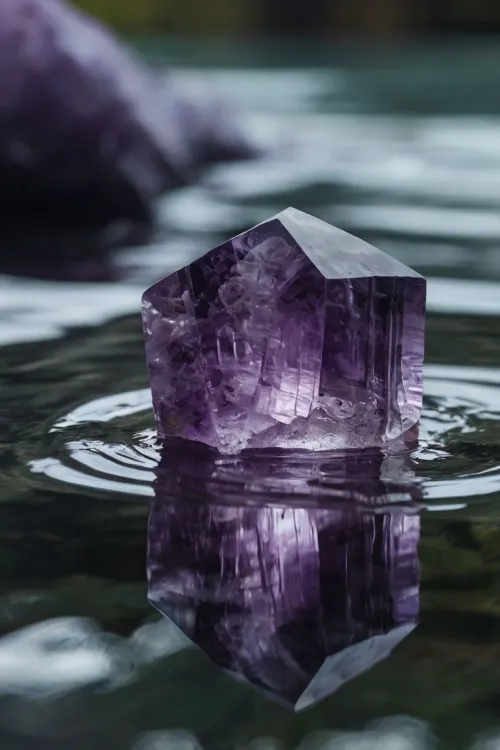
Stepping beyond solutions toward touch-sensitive actions requires mindful calibration. Soft-bristle toothbrushes create magic around curved surfaces when used at 50-75g pressure - think featherlight contact that avoids micro-scratches. The tool itself matters almost as much as technique: lint-free microfiber cloths lift residues with less static pull than cotton, particularly important with glitter that tends to jump stubbornly to new locations.
Let’s explore structured approaches:
First soften adhesives according to previous steps. Angle the crystal under bright light to reveal how particles catch in crevices. Using the toothbrush edge with tiny circular motions can dislodge flakes - work one square centimeter at a time. Wrap sticky tape around fingers sticky-side-out for capturing loose glitter without scratching.
Apply alcohol solution with precision swabs instead of soaking, letting solvents dwell only on affected zones. Gently scrape vertically with wooden cuticle sticks rather than metal tools. Always pull residues toward yourself instead of pushing pressure deeper into surfaces. Remember: friction creates heat - pause frequently to keep temperature equilibrium.
Resist rushing through these stages. Your patience gets rewarded with reflected light dancing through clean crystal planes.
Picture cleaning as protecting a stained-glass mosaic - tiny carelessness accumulates. Micro-abrasion risks escalate around sharp metallic glitter edges if scrubbed vigorously; instead, consistent light pressure tends to safeguard surfaces better than sporadic force. Thermal stresses hide everywhere: from sunlight exposure during accidental drying (risk of fracture) to hot water shocks during rinse cycles. Here’s a practical shield sequence:
Ultrasonic methods tempt many but risk vibration damage to fracture-included specimens. When that family heirloom holds memories within its facets, such approaches seem disproportionately reckless.
Freshly cleaned crystals reveal nuances previously hidden - purple depths appearing almost liquid under morning light. Keeping this restored glory involves thoughtful aftercare. Air-drying typically takes 30-60 minutes in moderate humidity environments - never accelerate with cloths or heat. Notice etched areas or persistent micro-scratches? Re-polishing after intensive cleaning may restore optical clarity when professionally done; but prevention remains infinitely superior. Storage transforms future cleaning needs: velvet-lined containers reduce glitter-attracting dust while avoiding abrasive surfaces. The simplest habit? Regular dusting with makeup brushes prevents buildup demanding aggressive removal.
Some scenarios demand creative calibrations that standard approaches miss. Double-sided tape leaves distinct adhesive foams requiring alcohol-soaked cotton balls pressed - not rubbed - to surfaces. Heat-discolored adhesives beneath glitter layers sometimes respond to freezing via ice cubes held briefly against residue before gentle scraping. Natural formations with deep caves might need distilled water flushes using syringe precision rather than soaking. Remember:
When uncertain, isolate the issue - treat one square centimeter as a test patch before committing whole surfaces to new approaches.
Approach this task like reassembling glass snowflakes - patience becomes your magic solvent. Remember those key safeguards: monitor solution temperatures like a guardian, apply pressure through fingertips rather than muscle, and always pause when frustration surfaces. Why not collect your tools tonight? Lay out that soft brush, microfiber cloth, and proper alcohol dilution beside a well-lit workspace. Tomorrow morning’s light may find your amethyst radiating renewed stories, its natural depths speaking clearly without glitter distractions. Start small - perhaps on one wing of the crystal butterfly - noting how techniques refine themselves between beginning and end.
The geological wonders beneath our feet deserve learning supported by verified resources rather than transient digital voices. These explorations can deepen through:


$
