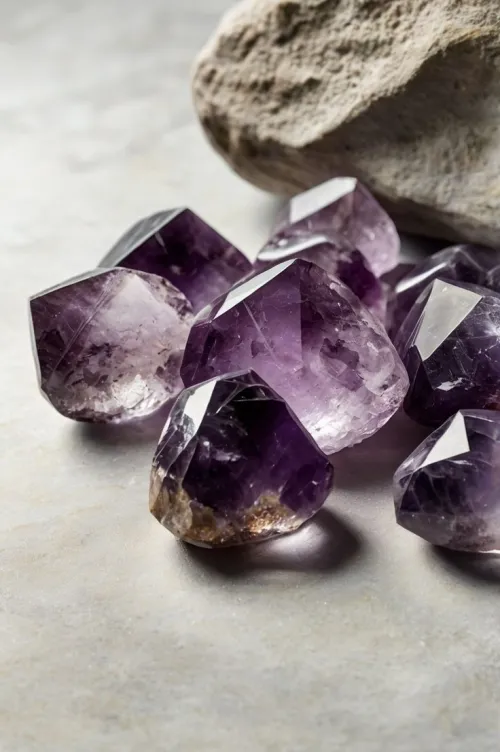
Imagine slipping on your favorite amethyst ring only to notice a dull film obscuring its violet sparkle, or discovering tarnish darkening the intricate silver vines holding your heirloom pendant. That subtle cloudiness between stone and metal? It's often an accumulation of body oils, lotions, and environmental residues sneaking into microscopic crevices during daily wear. Understanding how to navigate amethyst's porous nature with different metal properties prevents mishaps like accidental scratching during cleaning or gradual corrosion from unsuitable solutions. This guide will walk you through stone-safe techniques using common household items while highlighting critical distinctions between metals—whether you're refreshing delicate silver settings or maintaining robust platinum mounts. We'll explore not just the "how" but the "why" behind each method, helping you make informed choices for preserving both gem and setting.
When that necklace you wear weekly starts losing its luster, the solution begins with respecting amethyst's fundamental characteristics rather than reaching for industrial-strength cleaners. Understanding why certain approaches work while others risk damage can transform routine cleaning into precise, effective care. Remember that seemingly clean surfaces may harbor oils deep within the stone's natural fissures or beneath prong settings.
This gem ranks 7 on the Mohs hardness scale—hard enough to resist everyday abrasions from dust yet vulnerable to concentrated pressures. Dishwashing liquids without added moisturizers typically create low-risk solutions as they lift oils without leaving residue. Picture gently swabbing the stone with a soft-bristled toothbrush using the same pressure you'd apply to clean a ripe peach. For beads or intricate settings where crevices trap grime, focus on solution flow rather than aggressive scrubbing.
That mysterious dark line appearing where metal meets stone? Often it's chemical migration—reactions between cleaning agents and metal alloys creeping into amethyst's crystalline structure during cleaning attempts. Different settings demand tailored approaches: Sterling silver reacts aggressively with chlorine, developing irreversible corrosion, while gold alloys might seem sturdy but can suffer plating degradation or component weakening.
Moisture proves especially tricky—vintage designs with porous settings can trap water against the stone's underside for weeks after cleaning, accelerating corrosion. Ammonia-based solutions deserve extra caution; they may appear harmless yet encourage microscopic fissures in amethyst over repeated exposures. Your cleaning strategy should always account for the weakest component, particularly with mixed-metal pieces where silver and gold coexist.
Before filling a bowl with cleaning solution, take three minutes to examine your ring or pendant under good lighting—this stage prevents 90% of cleaning accidents. Look beyond obvious grime: slightly misaligned prongs signal weakened settings that could release stones during agitation, while tiny white scratching along facet edges suggests prior abrasive contact. Older pieces deserve extra attention; some historic setting techniques create micro-cavities holding polishing compound residues.
Check stone surfaces against bright light—liquid inclusions visible within amethyst indicate heightened fragility. Remember that repeated heat exposure often affects adhesion resins; if bezel-mounted stones appear foggy along the edges, the adhesive might be degrading. Always prioritize metal porosity: settings with visible pitting or texture variations act as chemical reservoirs. These evaluations help adjust immersion times and solution types accordingly.
Prong integrity: Gently run a toothpick along prong bases—movement indicates loosening
Inclusion mapping: Note liquid/gas bubbles visible through the stone
Setting age indicators: Identify soldering marks or handmade tooling
Surface condition: Detect microscopic abrasions using angled light
Tarnish on silver settings appears as shadowy discolorations, especially where metal contours meet stone bases—this demands methodology differing distinctly from gold cleaning. Saltwater exposure accelerates tarnishing substantially, requiring specialized non-abrasive polishes rather than universal solutions. Mix lukewarm water with teaspoon of phosphate-free dish soap in a glass bowl, avoiding aluminum or reactive containers.
Insert silver pieces using plastic tongs, limiting immersion to five minutes maximum for rhodium-plated components. For stubborn tarnish in engraving without stone contact, use pastes specifically formulated for porous silver alloys applied with cotton swabs rather than brushes. Always rinse moving pieces under flowing water—stagnant rinsing leaves sulfate residues that quicken re-tarnishing and deposit particles on amethyst backs.
That 18K gold pendant you wear daily accumulates skin acids and cosmetics faster than platinum—but responds beautifully to careful maintenance. Warm soapy water generally provides safe cleansing for gold alloys, though limit even gentle solutions to brief immersions per session. With white gold rings containing protective rhodium plating, reduce chemical contact frequency since most cleaners gradually diminish this coating—especially critical for eternity bands where stone settings rely on plating.
Focus on gentle flossing under stones using diluted soap solutions on dental floss where prongs converge, removing grime buildup without destabilizing settings. Heat remains dangerous for gold pieces: never apply steam directly and only pat dry using non-linting materials rather than vigorous rubbing. After polishing, inspect each prong tip—gently compressed microfiber cloths avoid textile fiber transfer to delicate mounting components.
Platinum settings shine with resilience—their minimal chemical reactivity permits diverse cleaning approaches while titanium mounting offers steam-cleaning tolerance without oxidation changes. Yet platinum's density risks micro-fractures in large amethyst drops during ultrasonic cleaning if undetected inclusions exist. For titanium engagement rings needing intensive cleaning, 30-second steam bursts followed by immediate cooling and pat drying prove more reliable than prolonged soaking.
Alternative mounts like tension settings require different approaches; rather than deep baths, use microfiber cloths dampened with distilled water for surface cleansing without pressurizing vulnerable stone positions. Be particularly cautious with resin-mounted or adhesive-set amethysts—alcohol-free solutions alone should contact these to prevent adhesive deterioration leading to stone detachment.
Storing that amethyst necklace properly between wears reduces cleaning frequency dramatically. Direct sunlight exposure during daily storage causes measurable color fading—store pieces in lined boxes away from heat sources. Humidity regulation helps most; silica desiccant packs hidden beneath jewelry tray liners absorb atmospheric moisture that promotes silver corrosion. Avoid mixing platinum and silver items during storage since their differing oxidation processes interact negatively.
Implement a rotation philosophy: resting jewelry between wears allows metal compression points to recover and prevents recurring grime trapping. Before placing items into storage, give them two minutes of post-wear prep—using a velvet-polishing cloth distributes protective oils from your skin equally while removing fresh residues. Store heavy pendants separately from delicate chains to prevent impact damage.
Despite meticulous care, professional intervention becomes essential upon noticing subtle changes like slight stone movement, setting discoloration beyond surface tarnish, or unusual light refraction cracks. Regular inspections help detect micro-fractures around prong tips early—such damage appears as minute hairline shadows under magnification before visible to the naked eye. Vintage settings deserve checkups every eighteen months since antique platinum alloys may develop porosity issues modern pieces avoid.
Communicate your cleaning habits explicitly to jewelers—if you've employed home techniques, disclose solution ingredients and application methods as ultrasonic units could fracture stones containing undetectable inclusions. Post-repair assessments should confirm setting integrity; request bench photographs showing prong realignment to understand interventions performed.
Think beyond immediate cleaning to holistic preservation: next time you handle your amethyst piece, consciously test one principle from this guide—perhaps examining prong tightness or considering solution temperatures. These incremental adjustments create compounding benefits over years, preserving both gem and setting integrity. Your jewelry box is the first defense; reorganize it tomorrow to prevent unexpected metal-to-stone contact using dividers or individual pouches.


$
